It’s been my experience after working with hundreds of clients, that in most cases the person seeking help simply doesn’t know what is happening; and that most don’t have the words or language to describe what they are experiencing.
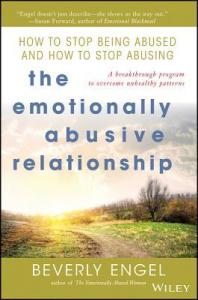
If you are starting from scratch to understand what abuse is, I recommend reading “The Emotionally Abusive Relationship” by Beverly Engel. It’s easy-to-read and very balanced. I also recommend going to a DV (domestic violence) agency to learn how to safety plan and inquire about the many resources available to victims of domestic violence.
The following article is a brief and informal description of domestic and emotional abuse in order to hopefully be accessible to readers. From what I’ve observed, most clients are kind people with a variety of coping skills learned to protect and defend themselves; however, they do not have the validation that what they have experienced falls under the category of domestic violence. And if they do know what is happening, they may be repeating the trauma in their adult life in order to resolve/gain mastery over their childhood issues.
While I believe the following is non-triggering; if it is, let me know and I can adjust accordingly!
Domestic Violence 101: The Cycle of Violence
Let’s say that you are in a relationship with *Andy. You meet; maybe there is something not-quite-right about Andy; but there is a reason – or many reasons – why you stay together. And over time you attach and bond with each other. Like a mother to her child, it feels natural; humans are made to bond and attach. In the beginning, what you feel towards each other seems a lot like a regular, healthy relationship.
However – over time – the bonding starts to feel unhealthy and a pattern of unpleasant emotions and behaviors starts to cycle. You start feeling like you are not yourself.
At this point, a resilient person with strong coping skills and sense of self says, “Hey, this is not right! Something is wrong. Let’s find a way to get outside help. Let’s go to therapy.”
But perhaps, this doesn’t work. Andy says, “You’re the one with the problem, you’re crazy, not me. You need to go to therapy!” You may decide to leave the home, you may vent to a friend, or you may seek individual therapy for yourself.
However, let’s say, you are not as resilient for many reasons (ie. you are young, you have little outside support, you experienced several adverse childhood experiences, there was abuse in your family of origin, there are cultural issues, safety concerns, or you may have co-occurring mental health vulnerabilities). You start thinking, “I don’t know what is happening; but I can deal with this; maybe it will get better; maybe there is something wrong with me.” And you stay in the relationship.
Life happens. Things get busy. You work, go to school, have children, pay bills. Pretty soon, things escalate again. The classic Cycle of Violence is taking place; but you have no idea what it is or that it is happening to you.
At this point, you say, “Hey Andy, you can’t do this to me anymore; you need to get help or I am leaving!” And things escalate again; you withdraw inward and isolate because it’s confusing, embarrassing, and of course, heart-breaking.
The cycle repeats. Not all the time, maybe just every few months. There may even be sexual abuse, physical abuse, financial abuse, or substance abuse. Maybe Andy has a personality disorder; or other untreated mental health issues; and maybe you yourself have mental health issues such as anxiety or depression. Or maybe one or both partners grew up in a home where family violence was acceptable; and “healthy and normal” is a not a skill that was learned at home.
Unknowingly, you start to develop trauma. Battered-women’s syndrome. Post-traumatic stress disorder. Stockholm syndrome. Then, you stop being able to function normally anymore. And your normal coping skills such as venting to friends, going to work, or walking on eggshells are no longer sufficient.
Even at this point, many people can still only say and comprehend the words “emotional abuse”. The other types of abuse are embarrassing. And because it’s a complicated subject, that’s a good enough place to start!
*Andy is gender-neutral
Click on the photo for more info!

Click on the photo to view the Power & Control Wheel.
© 2014 Bright Ones Counseling, LLC
 Monica M. White, MS, LMHC